Perverse outcomes everywhere. Greenwaves and how good ideas don't happen.

(If you'd prefer a video version of this)
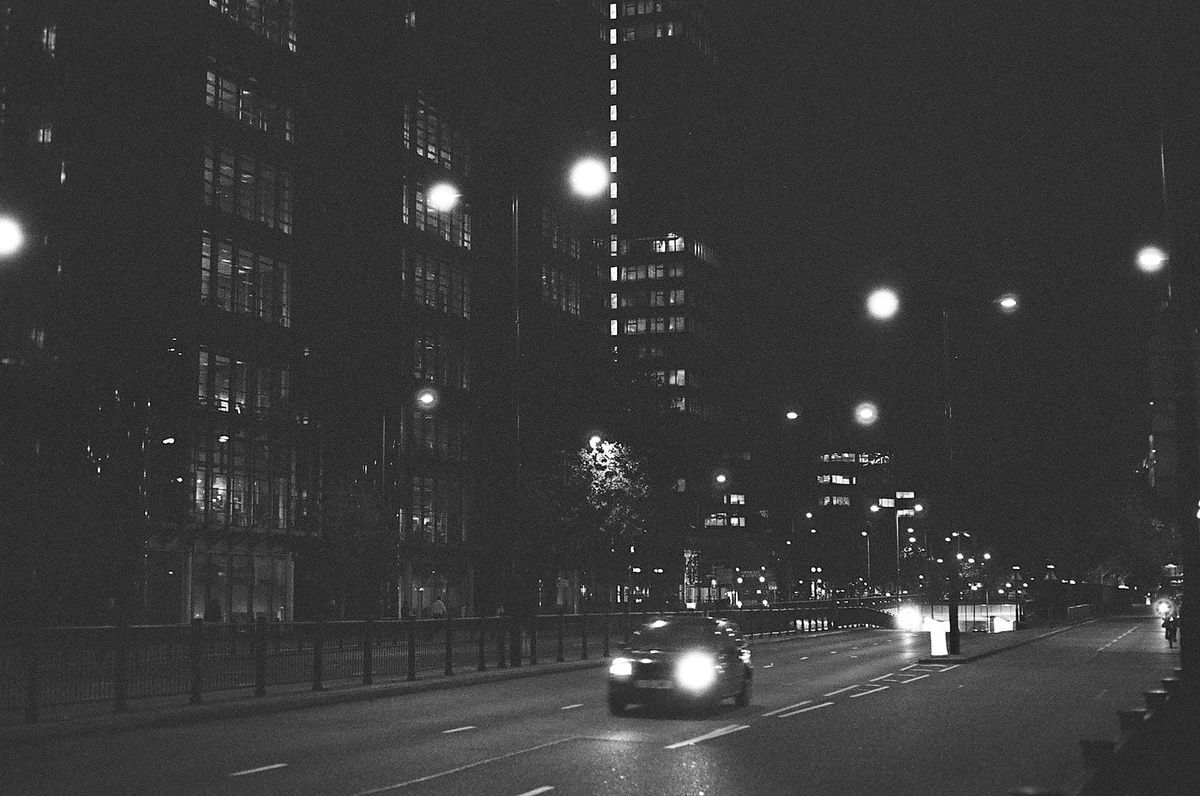
A few weeks ago I made one of my stupid videos about 'surfing the green wave'; driving up the Euston/Marylebone Roads getting green lights all the way. I remember seeing it on a documentary about London taxi drivers years ago.
That led a kind correspondent to send me a link that suggested that green waves are bona fide traffic planning phenomena. That led to some inevitable googling. And that led to a tale of BBC murkiness and astonishing bureaucratic behaviour that might be emblematic of the enshittification of public services.
Surfing the green wave
The best description of the green wave is in this post on the Cabbie blog:
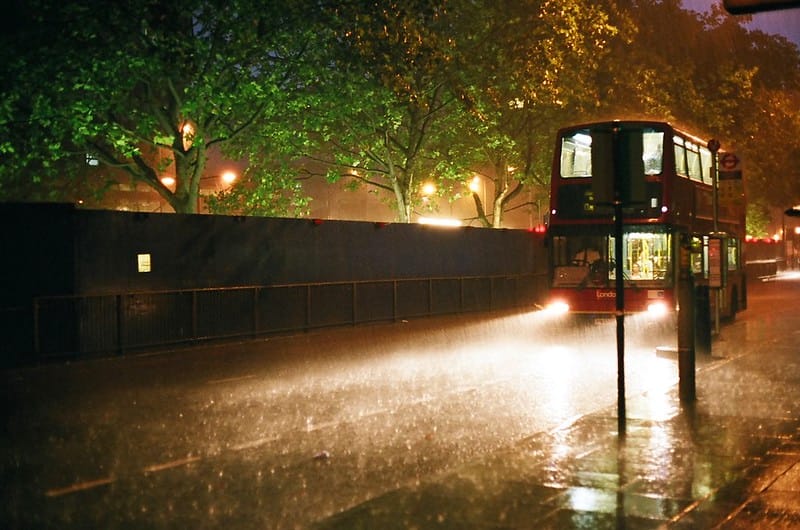
"Like London itself, the cab trade is full of interesting stories, myths and general nonsense. But one of my favourite cabbies things is trying to “ride the green wave” from King’s Cross to the Marylebone flyover.
This is when you drive that whole stretch without hitting one red light along the way. No-one is actually sure if it’s been done or not but there are plenty of, probably apocryphal, stories of cab drivers carrying on journeys all the way to the Marylebone Flyover to complete the Green Wave, despite their punters only wanting to go to Baker Street."
Some maths and a startling assertion
The wikipedia entry links to some green wave examples, explains the thinking behind it and outlines the maths. It's very straightforward.
For a grid of a one-way streets, such as a simple square-shaped grid going from intersection 1, to intersection 2, to intersection 3, to intersection 4, and back to intersection 1, the formula may be expressed as such: n×C=t12+g2+t23+g3+t34+g4+t41+g, where: gi = green time at intersection i, in seconds, tij = offset for the traffic direction traveling from intersection i to intersection j, in seconds, C = cycle length, in seconds, n = an integer ≥ 1
It also includes a fairly startling assertion:
In the UK, in 2009, it was revealed that the Department for Transport had previously discouraged green waves as they reduced fuel usage, and thus less revenue was raised from fuel taxes
Tax man demands you burn fuel
This assertion springs from a BBC report from 2009.
"Motorists should face fewer red lights following the relaxation of government guidance on the flow of traffic. Local councils can adopt "green wave" systems of sensors, where vehicles at or just below the speed limit trigger a succession of green lights. Environmental and motoring groups say carbon emissions will be reduced. Previously the Department for Transport (DfT) had discouraged the systems which reduce fuel use, resulting in less tax being paid to the Treasury. But now, rather than seeing green wave systems as a "cost" to the public purse, the DfT views them as a "benefit"."
The BBC report bases this claim on a new guidelines document called 'the New Approach to Appraisal' from which they quote this:
It states that it is "counter-intuitive" to view the higher tax revenues from discouraging green wave schemes as a "benefit"
Of course motorist-bashing story played into the prejudices of many about greedy government:
In Nottingham, we used to have the most exquisite green wave when the County Council were in charge. When Labour came to government power traffic control was passed to the City and Borough Councils who created a Crimson Cascade (as they call it). I worked out that they make 7p in fuel duty from everyone stuck at the lights. Every set changes red, and they introduced phantom phases and new sets 100 yards apart which would change alternately.
I will be writing to ask when the lights will be turned back to normal.

Really tho?
But many others were incredulous. Can this really have been government policy? Andrew Steel blogged about the policy change at the time and wrote this in response to skeptical commenters:
I’m not sure exactly where the claim came from. I was asked the other day and realised that, though I’d spent an unhealthy amount of time on the DfT’s website, I’d not explicitly seen it—though nor had I seen mention of green waves other than for emergency vehicles, so knotty a maze are their guidelines. A number of other news sources had parroted the tax claim, but in this world of pass-the-press-release, that doesn’t exactly count as corroboration. I’ve had another look this morning and not found much. All the appraisal documents suggest that you should take tax revenue into account when costing a new project, so perhaps it is from this that we can implicitly extract their guilt, or perhaps a more thorough analysis of one of their many complex acronym-tastic appraisal algorithms would turn up an unhealthy obsession with fuel taxation, but it’s far from explicit.
I’ve e-mailed the Beeb asking for their source.
So what was actually going on?
- There doesn't seem to have been an explicit ban - don't approve green waves, we need the taxes. I can't find any explicit prohibition in the National Archives (though the pre-2009 WebTAG data book and unit files are largely inaccessible in their original form)
- Was it more of an implied ban? The idea being that when local councils use the DfT's official transport appraisal framework - WebTAG (Web-based Transport Analysis Guidance) to assess whether a proposed transport scheme is worth funding the lost duty would register as a negative. And so green waves became harder to justify or approve. (And what changed in 2009 when an updated WebTAG unit (Unit 3.3.5) explicitly endorsed green waves on environmental grounds this made green waves possible.
That's more plausible. But really hard to prove.
This is why we can't have nice things
I asked a government insider to comment and he said:
"...all of that slots together.
The bigger point is that classic cost benefit analysis creates perverse outcomes everywhere because it focuses only on what can be measured.
HMT (Treasury) can't put figures on beauty, or design, or micro emotional fillips of public satisfaction, or thinking about the very long-term, etc, etc. So the country doesn't get those things, consistently. This is bad. Greenwaves exemplify that nicely, whether the exact details of the story stand up or not.
HMT maintains that its guidance asks for all the qualitative stuff to be accounted for in business cases, and it does. It's just that when the chips are down, nobody cares about it...
...2009 was probably the peak of climate economics' influence on HMT... ...The Stern review in 2006 did the judo move of turning the ephemeral concept of climate change into numbers that could fit into a cost-benefit analysis.
If you want something to shift up govt's priority list, find a way to quantify it that HMT will buy. Whether it fits with reality or not is secondary.